Dr Maximiliano Canepa

Start Date: April 2023

College of Sciences and Engineering, Institute for Marine and Antarctic Studies (IMAS).

University of Tasmania

Dr Maximiliano Canepa

Start Date: April 2023
Biography

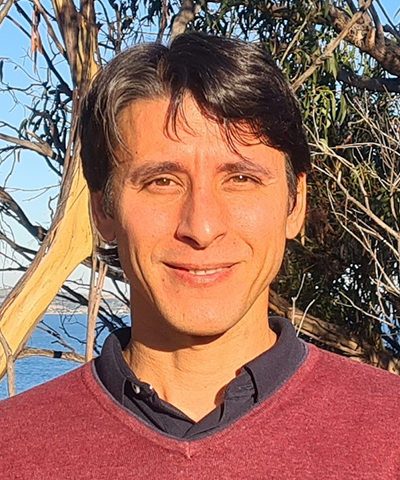
I completed both Bachelor and PhD in Biological Sciences in fish physiology from the University of Buenos Aires, Argentina in 2005 and 2010, respectively. After a period as Postdoctoral Fellow I worked in the aquaculture industry for 10 years in Australia developing expertise in Aquaculture biology. Then, having worked in both academic and commercial settings gave me the opportunity to integrate developed skills and aim for high productivity, quality and efficiency in undertaking complex research activities. I am currently working as a full-time postdoctoral research fellow at the University of Tasmania, Australia, addressing knowledge gaps in offshore and high energy Tasmanian Atlantic salmon production.


September 2025 Update

New Publication: Size matters with respect to the effects of suboptimum summer conditions on Atlantic salmon production

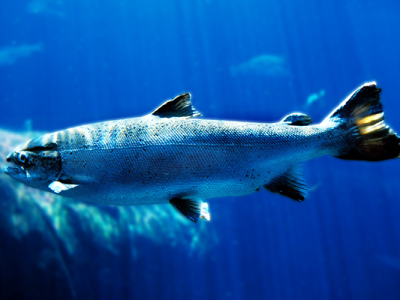
This paper is a key piece of the Experimental Platform for Aquaculture Production (EPAP) project. It captures the core of our first two major experiments and provides solid evidence on how suboptimum summer conditions affect salmon performance, especially in relation to fish size. Small seawater salmon (~420 g) showed strong resilience, feed intake increased by 42% during recovery compared to before the summer challenge, and efficient growth (feed conversion ratio) improved by 8.6%.

In contrast, large seawater salmon (~2600 g) experienced a 56% drop in feed intake under suboptimum summer conditions and recovered less well, 18.5% below acclimation levels. Overall efficient growth (feed conversion ratio) improved by 28% during recovery, but interesting many individuals (39%) still lost weight. We used Machine Learning analyses to reveal that around 30% of the large salmon had poor growth trajectories, this was less than 9% in small salmon. These findings are directly relevant to Tasmanian Atlantic salmon farming, offering practical insights into size-based resilience and helping us build predictive tools and mitigation strategies. It is a strong foundation for the next phase of our research with industry.

“It is rewarding to see our early EPAP experiments deliver such clear insights. This work strengthens our collaboration with industry and brings us closer to predictive solutions that support sustainable salmon farming. Tasmania’s salmon industry is already preparing for the effects of climate change, with predicted summer conditions pushing the limits of what fish can tolerate. We found that long-term exposure to warmer, lower-oxygen water had a greater impact on larger salmon, reducing their growth and feed efficiency. These results highlight the importance of considering fish size when planning for climate resilience in aquaculture.”